Ceiling fans do more heavy lifting in Orange County homes than many people recognize. They keep bed rooms comfy on summertime nights, aid living-room feel fresh without cranking the air conditioner, and offer patios a breeze on still nights. The minute a fan begins to wobble, hum, or run slow, the entire space feels off. As a licensed electrical contractor who has actually changed and balanced hundreds of fans from San Clemente to Fullerton, I have a simple view: a fan must run smooth and peaceful, move the correct amount of air, and appear like it grew right out of the ceiling. Anything less suggests it needs attention.
This guide describes how I evaluate a fan in a home or organization, when replacement beats repair, how to choose the right design for seaside and inland conditions, and what a precise balancing task really includes. I will also reveal where a professional makes a distinction, specifically with high ceilings, vaulted spaces, and older homes with questionable junction boxes.
What a good ceiling fan need to do
An appropriately sized and set up ceiling fan modifications how a room feels in under a minute. You get air movement throughout your skin, not a typhoon in your eyes. Speeds stand out. On high, you should feel a strong downdraft while able to hold a discussion. On low, the motor is nearly silent. Lights, if installed, dim cleanly without shimmer or flicker. The canopy at the ceiling is tight, the downrod is directly, and there is no noticeable sway. When you search for, you notice the design, not the hardware.
Under that simpleness sit a handful of details I constantly check: blade pitch in the 12 to 15 degree variety for significant airflow, a motor with adequate torque for the blade span, a fan-rated ceiling box that is anchored to structure, and a control that is matched to the motor. When those four pieces line up, the rest follows.
Why Orange County homes see the exact same fan issues once again and again
Our climate and building designs develop a repeatable set of challenges.
Coastal air brings salt, and salt likes to wear away set screws, downrods, and the tiny screws on blade irons. I see this in Newport Beach and Dana Point every spring. Once corrosion sneaks into the set screw that holds the ball joint at the top of the downrod, even a little wobble can work the joint loose and make a tight fan go careless. Outdoor fans near the coast do finest with ABS blades and stainless or coated hardware, noted as wet or wet rated.
Inland systems from Irvine to Rancho Santa Margarita typically have high living space ceilings, often 16 to 20 feet, with a fan that was set up when the house was constructed. Those fans run constantly over open-plan spaces and their capacitors finally provide. When a three-speed fan all of a sudden has just one slow speed or declines to begin unless you press it by hand, that capacitor is a suspect. On vaulted ceilings, a worn ball joint can likewise include a sluggish sway that you only see when the TV install vibrates.
Older homes in Anaheim, Orange, and Santa Ana in some cases conceal a non fan-rated ceiling box installed decades ago to hold a basic light fixture. A fan weighs two to 4 times as much as a light and creates vibrant load. The National Electrical Code needs a box that is listed for fan support. If a fan is hung from a thin metal saddle or a breakable plastic box, it can come loose. I have actually seen a split plastic box give way during a heavy winter wind when a patio area door was exposed and the fan vibrated at a resonance. Nobody was injured, but that space got very peaceful, really fast.
When to replace the fan and when to service it
Replacement is generally the best call when the motor is noisy, speeds are unpredictable without a clear control or capacitor issue, the blades are drooping or distorted, or the finish is corroded beyond saving. I changed 3 similar fans in a Costa Mesa duplex after a tenant vacated because the motors had actually established a metallic whine. Those builder-grade units ran every day for 10 years. The bearings were past their life. No stabilizing technique can bring those bearings back.
Service and balancing make sense when the fan is the best size and type, the motor is healthy, and the wobble or noise started after a move, a seasonal cleaning, or a light package modification. Numerous balance problems originate from one loose blade iron screw, a slightly bent bracket from an accidental hit while moving furnishings, or a blade that picked up a layer of sticky dust on the leading edge. I have fixed a fan in an Objective Viejo nursery by simply tightening up the canopy and replacing one removed blade screw. 10 minutes, issue solved.
If you are unsure, a quick consult a regional electrician in Orange County can conserve time. An experienced tech can tell in a minute whether you are chasing a lost cause or a small adjustment.
Safety and code points that matter
Before I touch a fan, I think about package and the control. Ceiling-suspended paddle fans should be supported by a fan-rated outlet box that is noted for the purpose. It needs to be marked appropriately and protected to a framing member or a listed brace. In houses, the majority of living areas and bed rooms require AFCI security on the circuit. In some remodels, a new fan place or a brand-new circuit will trigger an electrical assessment in Orange County or the city where the home sits. Utilizing a fan speed control that is designed for air conditioning induction motors prevents the humming you get with light dimmers that somebody incorrectly utilized on a fan.
Turn off the breaker, then confirm with a meter that you have zero volts at the ceiling box. A fan that weighs 20 to 30 pounds looks workable till you are on a ladder with your hands overhead and your head slanted back. I like a 2nd individual to support the motor throughout the wiring phase, particularly on high ceilings. If the ceiling goes beyond 12 feet, planning for a safe ladder or scaffold makes the distinction in between a clean job and a strained shoulder.
Sizing and selection for OC spaces and patios
A 44 inch fan fits most bedrooms approximately roughly 12 by 12 feet. A 52 inch fan manages typical living or living room in the 14 by 16 foot variety. Great spaces, long kitchen areas, and open plans often need 56 to 60 inches, sometimes two collaborated fans spaced to prevent air accidents. What matters more than size is airflow, determined in cubic feet per minute. Many quality fans provide 4,500 to 7,000 CFM on high. If you want to bump your thermostat up by 2 to 4 degrees and keep the exact same comfort, go for a fan that can hit the upper half of that range. A commonly cited guideline is that raising the thermostat by one degree can conserve around 3 percent on cooling energy. Multiply that by two or 3 degrees throughout months and you will feel it on your summertime bills.
On blade pitch, I prefer 12 to 15 degrees. Anything flatter tends to cheat on claims by moving quickly but not moving much air. Anything steeper often requires a more powerful motor and can get noisy on high if the quality is not there.
For coastal patios and covered decks, select moist rated at minimum, damp rated if the fan can see wind-driven rain. I have actually had excellent results with composite blades that do not take in wetness and stainless hardware that resists salt. Inland outside cooking areas in places like Yorba Linda can get away with moist ranked fans, however I still prevent basic indoor fans outside.
For sloped ceilings, use a suitable canopy that enables the right tilt and a downrod enough time to clear the slope. On a 16 foot peak with a 6 in 12 pitch, a 36 to 60 inch downrod often puts the blades in the sweet spot, typically 8 to 10 feet above the flooring. Too high, and you feel the motion without cooling. Too low, and high guests will duck.
Smart functions are now common. Wi-Fi or Bluetooth controls, voice assistants, and wall remotes can be hassle-free, specifically if the existing switch location is not perfect. If you do not love apps, choose a basic pull chain plus a wall control. The secret is to match the control to the motor. I see flicker and hum when someone sets a generic dimmer with a fan light that wants a triac dimmer ranked for LED or an ELV motorist. Your electrician can sort that out during installation.
The quiet killers of balance: dust, loose screws, and blade iron bends
The most common wobble in Orange County homes originates from 3 simple things. First, a filthy cutting edge creates weight on one side of each blade. It does not take much. Clean the blades with a gently moist fabric, top and bottom. Second, the screws that hold the blade irons to the motor real estate and the blades to the irons back out with time. A quarter turn can firm up a vague sway. Third, a blade iron can get bent by an action ladder bump or a child tossing something that grazes the blades. Even a couple of millimeters of bend shows up when the fan spins.
On service calls, I determine blade tip height from the floor at 4 points, check and tighten all relevant screws, and examine the downrod ball https://pastelink.net/l2f8bbdo joint and the canopy. I also search for a slack neutral or a poor ground inside the canopy, both of which can introduce hum through a light kit.
A field story from Irvine
A property owner in Woodbridge called about a master bedroom fan that wobbled so hard the bed vibrated. The fan was a 52 inch flush mount set up when your house was developed. I discovered a non fan-rated plastic ceiling box with a hairline fracture and no brace to framing. The screws barely held. The blades were fine, and the motor was healthy. The fix was not to stabilize the fan. It was to change the box with a noted brace box that locks to the joists, then hang the fan back up. After that, a tiny balance weight on one blade took care of the last number of degrees of sway. That job is why I constantly start with the support.
A fast house owner pre-check before calling a pro
- Clean the blades leading and bottom, then run the fan to see if the wobble changes. Tighten the visible blade screws carefully, both at the blade iron and at the motor. Check that the canopy is snug to the ceiling and the downrod ball is seated in its slot. Listen at each speed for hum from a dimmer. If you have a dimmer on the fan, stop and call an electrician. Look for blade warping by holding a straight edge along one blade and comparing to the others.
If any of these steps feel risky or the ceiling is high, a quick call to a residential electrical expert in Orange County is the much better move.
How I balance a ceiling fan step by step
- Measure blade idea height at 4 points and remedy any bracket bends to equalize. Tighten all blade and motor screws, then test at low, medium, high, keeping in mind the worst speed. Add a short-term weight near the midpoint of one blade and test, moving the weight around to find the calmest spot. Commit the weight with the consisted of adhesive or tape, fine tuning by splitting the weight if needed. Verify the install hardware is tight and the box is strong, then run the fan for several minutes to confirm.
There are times when a fan is balanced completely at medium however misbehaves on high. That typically indicates the bearings are using or the downrod ball joint is not smooth. I keep silicone-safe lube for particular joints, however if the ball is pitted from deterioration, replacement of the rod or the joint is the best fix.
Replacement, setup, and what it costs locally
In Orange County, swapping a fan for a brand-new system at an existing, properly supported box with average ceiling height often takes around an hour to ninety minutes. Lots of property owners are surprised how much quicker it chooses an experienced team and the best ladders. Labor for a simple replacement typically falls in a variety you can spending plan for without stress. When the job needs a brand-new fan-rated brace, wiring a brand-new switch leg, or working on a 16 foot ceiling, the time and cost predictably increase. On a current job in Ladera Cattle ranch with a 20 foot great space, we arranged 2 techs and a scaffold. The overall time, consisting of clean-up, was still under 3 hours.
Balancing service by itself is generally the fastest visit on my calendar. If package and motor are healthy, a systematic balance and tighten runs under an hour. I share this so you can prepare your day and not relax questioning why a basic task is taking forever.
For industrial spaces, such as dining establishments in Old Towne Orange or little studios in Costa Mesa, bigger HVLS-style fans or numerous collaborated systems can require structural checks and various control techniques. That is where an industrial electrical contractor in Orange County examines load, clearances, and how the fans will engage with sprinklers and lights.
Controls that prevent hum and headaches
The incorrect wall control is responsible for a huge portion of telephone call about noise. Light dimmers are not fan speed controls. They slice the waveform in ways that make an air conditioner fan motor sing or stall. I see this when somebody upgrades to LED lighting and swaps in a variety pack of dimmers, then later on links a fan to one. Select a fan speed control that states it is for ceiling fans and is compatible with your motor type. For fans with integrated remotes, I like to wire a simple on-off at the wall and let the remote or app handle speed. If the home has clever switches currently, a clever fan control that talks to the very same platform brings order to the wall plate. During an electrical evaluation in Orange County, controls hardly ever get a tough look unless there are obvious problems, but you desire a setup that is safe and steady, not a science task that only one person understands how to use.

Old circuitry and surprises behind the canopy
Whole-home rewiring is beyond the scope of a fan appointment, but fans frequently expose covert concerns. I when pulled a fan in a 1960s home near Chapman University and found breakable cloth-insulated conductors with a taped splice sitting loose in the box. The fan had actually masked a problem. We arranged a small repair for that circuit and talked about long-term plans for an electrical panel upgrade, considering that the panel was at capacity.
If your fan circuit trips when you change speeds, that is not a balance concern. It indicates an electrical wiring or device fault. An Orange County electrical contractor can perform electrical troubleshooting, separate the defect, and make a code-compliant repair. I do not advise repetitive reset efforts on a breaker that keeps tripping. It is informing you something important.
Coastal patios, inland lofts, and the best materials
Materials matter outdoors and on high ceilings. On patios in San Clemente, ABS or composite blades keep their shape in damp air. Aluminum or stainless hardware resists salt, and sealed motors last longer. Inside, particularly with high ceilings in places like Tustin Cattle ranch, a tidy downrod that matches the space's metal surfaces can make a designer's day. I have installed oil-rubbed bronze rods in Spanish-style homes and brushed nickel in modern-day lofts, both grounded and bonded effectively. The point is to treat the fan as part of the room, not an afterthought. Selecting surfaces that match door hardware and components makes an area feel intentional.
Working with a licensed electrical contractor in Orange County
Plenty of fans get set up by convenient property owners, and many of those installs are just great. The tasks that go sideways generally involve high ceilings, sloped installs, old boxes, or mismatched controls. A licensed electrical contractor in Orange County brings ladders, braces, torque-limited drivers, and the repeating that makes the work clean and quick. If your search history consists of electrician near me Orange County or best electrical contractor Orange County, you are looking for somebody who will show up with that precise toolset and judgment.
Emergency calls do take place. A fan that comes loose, a smoking cigarettes motor, a broken bracket, or a fan light that shorted out after a retrofit LED failed can validate an emergency situation electrical expert in Orange County, particularly if power needs to be safely isolated. A 24 hour electrical contractor who manages residential calls can action in, make the location safe, and schedule a correct repair work throughout daylight.
On the other end of the spectrum, there are exact same day electrician choices for those times when a nursery requires a quiet fan before bedtime or a home office requires a cooler feel before a deadline. Budget-friendly does not need to suggest cheap. It suggests clear prices, not a surprise add-ons, and genuine parts instead of shortcuts.
How ceiling fan work ties into the rest of your electrical system
Fans sit at a crossroads of convenience and circuitry. If you are already preparing a lighting setup, recessed lighting upgrades, or outside lighting, it is efficient to collaborate the fan work. Running a brand-new switch leg for a fan is easier when drywall is open for can lights. If you are moving toward wise home wiring, think about wise fan controls in the exact same strategy so your app or voice control covers all significant loads.
Big jobs like an electrical panel upgrade or panel replacement are natural times to think of ceiling fans. Updated AFCI breakers and new home runs eliminate the secret journeys and periodic faults that can pester older circuits. I have actually seen a fan that hummed just at night become peaceful after a panel replacement merely because the neutral and grounding were remedied and a limited connection was retired.
If you are including an EV battery charger installation for an electric automobile charger, the electrical contractor is currently reviewing your load calculation. Folding ceiling fan prepares into that go to can conserve a 2nd appointment.
What balancing feels like when it is done right
After a balance, a fan should being in area like it is not even moving. On high, you can see the blades blur, but the motor housing hardly budges. On medium, the air drift makes a room feel a couple of degrees cooler. On low, you forget it is there until the room gets stuffy and you discover. You will also discover what is not there. No rattle from the light set. No rhythmic click from a loose pull chain. No shimmer from a mismatched dimmer.
I keep a little journal of difficult balances. The most satisfying one in 2015 was a high-end fan in a Laguna Beach living room with a 14 foot ceiling and ocean views. It wobbled at a speed the owner avoided for months. The repair was one quarter-ounce weight positioned 2 inches from the leading edge on a single blade, after correcting a one-degree bend in a blade iron. The minute it settled, the owner laughed since the room felt like it lastly matched the view.

When you need to not wait
There are a couple of warnings that should prompt a call rather than a wait-and-see approach. If a fan smells like hot electrical insulation, power it down at the breaker and call a pro. If the canopy moves when you touch it, or if you see fractures in the ceiling around the fan box, it may be working loose. If the fan makes metal-on-metal scraping sounds, the motor or bearings are stopping working. If you discover a plastic, non fan-rated box, change it. All of these remain in the category where a regional electrician in Orange County earns their keep.
Final ideas from the field
A well balanced, properly supported ceiling fan is among the greatest value upgrades you can produce everyday convenience. It partners with your HVAC to lower run time, it includes style, and it keeps nights tolerable when the marine layer turns sticky. Whether you live near the coast, up in the hills, or in a main system, the best fan and a meticulous install will pay you back every day.
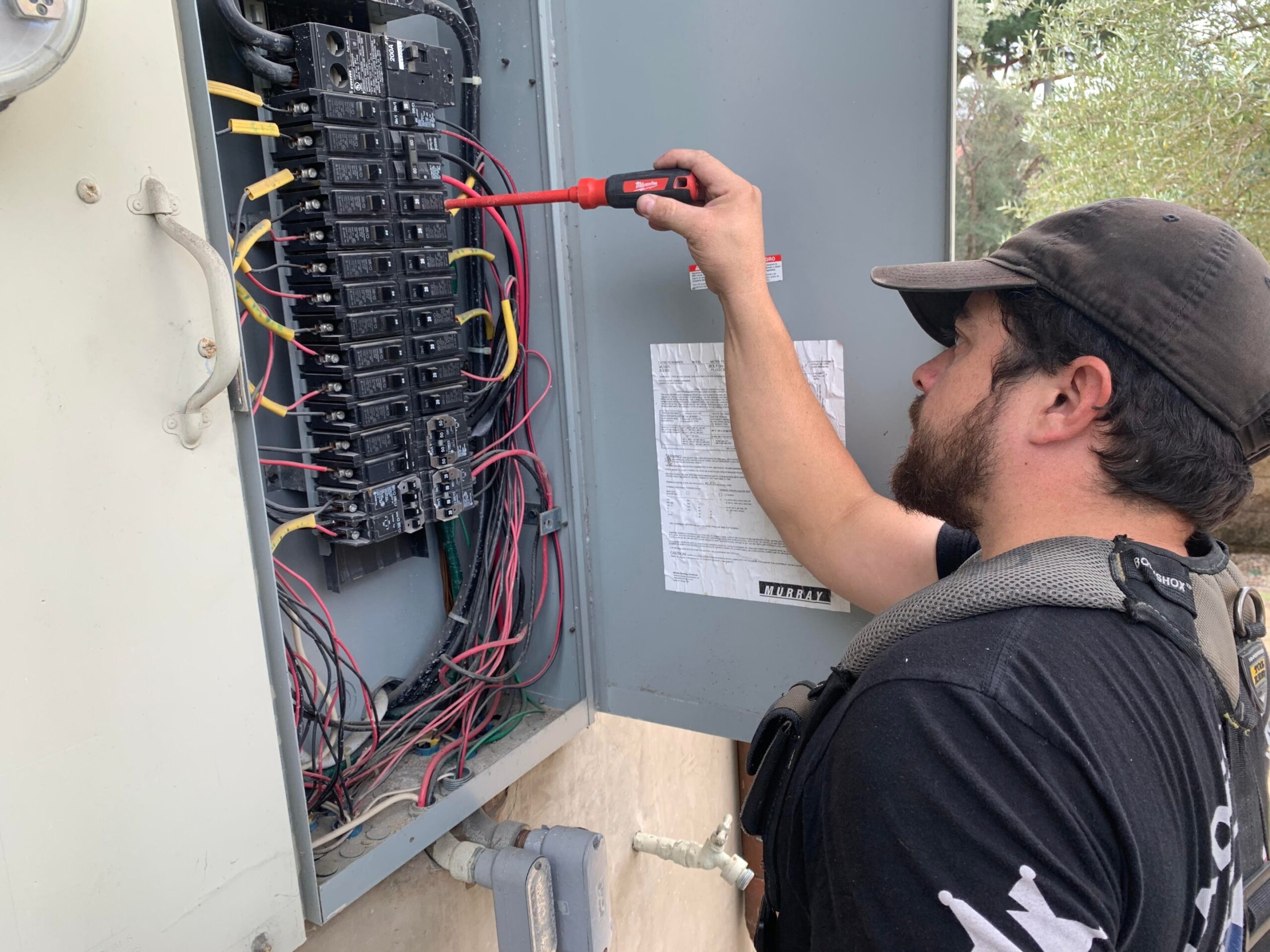
If you are picking in between a repair work and a replacement, think about the age of the motor, the quality of the initial set up, and the demands of the space. If you require aid, a top rated electrical contractor in Orange County who does ceiling fan setup, electrical troubleshooting, and Orange County electrical repair can assist you, deal with the heavy lifting, and leave the space cleaner than they discovered it. That is the goal on every service call, whether it is an easy balance in a bedroom or a coordinated set of fans and lighting in a big space.
And if the project broadens, it works to work with one Orange County electrical contractor who can likewise manage the associated work you might tackle next, from outlet installation and clever home electrical wiring to low voltage electrical wiring, generator installation, or an ultimate entire home rewiring. A good group keeps the details straight. Your rooms stay comfy, your fixtures remain peaceful, and your nights feel right.